
August 1 – October 3, 2026
Opening reception: Saturday, August 8, 3 – 5 PM
I am included in the this show exploring traditional handmade Hanji paper.
Malaga Cove Library
2400 Via Campesina Palos Verdes CA 90274
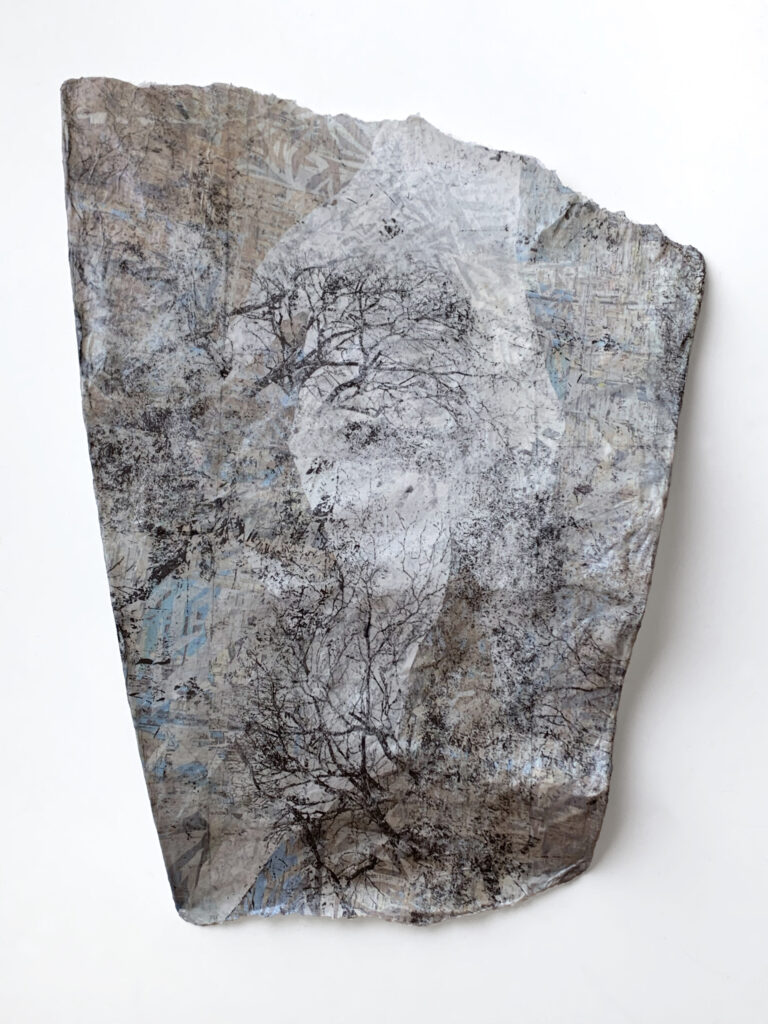

Hanji: threads of tradition and innovation
When many people think of traditional Asian paper, the term rice paper often comes to mind. Korean Hanji, however, is a distinct tradition of papermaking. Made from the inner bark of the paper mulberry tree (dak), Hanji has been produced in Korea for more than a thousand years and remains an enduring part of the country’s cultural heritage.
Unlike ordinary wood-pulp paper, Hanji is formed from long, interwoven fibers that give it exceptional strength while remaining remarkably soft and flexible. For centuries it has been valued not only for its durability but also for its unique relationship with air, moisture, and light. In Korea, Hanji is often described as a paper that “breathes.” Its porous structure helps regulate humidity, while its translucent surface gently diffuses light. Beyond calligraphy and painting, Hanji was traditionally used for the windows and doors of Korean homes, where it softened daylight and connected the interior to the changing seasons.
For many contemporary artists, Hanji offers far more than a surface on which to work. Its responsiveness to water-based media encourages a creative dialogue between intention and material. Ink and pigment seep, spread, and settle within the paper’s fibers, producing subtle effects that cannot be entirely predicted or controlled. The artist establishes the conditions, but Hanji itself participates in the making of the image, rewarding sensitivity, patience, and a willingness to collaborate with the material rather than simply impose upon it.
The works in this exhibition reveal the many ways artists have embraced these qualities. While rooted in a centuries-old tradition, each work demonstrates an individual and contemporary response to Hanji’s unique character. Here, tradition becomes not a constraint but a source of invention, enabling artists to explore new visual languages while remaining connected to one of Korea’s most enduring cultural materials.
As you explore the exhibition, we invite you to look closely at the texture of the paper, the way it receives and reflects light, and the subtle traces left by water and pigment. In these works, Hanji becomes more than a support: it is an active presence in the creative process, shaping the image as surely as the artist’s hand.